How Fast Should You Respond to a New Lead?
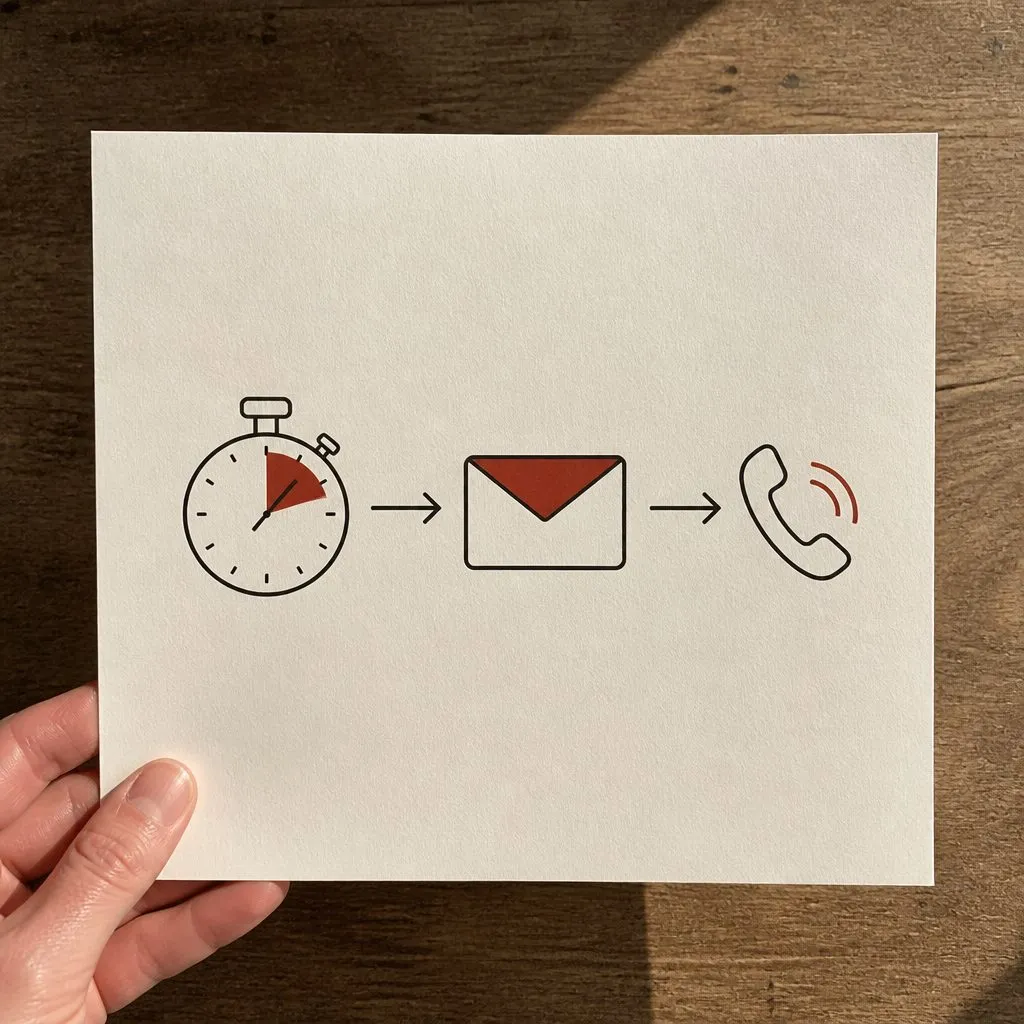
For a high-intent inbound lead, acknowledge the request immediately and aim for a useful human response within five minutes during staffed hours. That five-minute target comes from lead-response research that is now more than a decade old and measured contact and qualification, not guaranteed sales. It is still a sound operating target, because the same research shows the odds of reaching and qualifying a lead fall as the delay grows, and many businesses take hours to respond.
Here’s what speed to lead is, what the research does and does not show, and how to set a benchmark you can actually hit.
What Is Speed to Lead?
Speed to lead, also called lead response time, is the elapsed time between a prospect submitting an inquiry and your first contact attempt back to them. Form submitted at 2:14pm, first call placed at 2:51pm? That’s a 37-minute speed to lead. The metric applies to every inbound channel: web forms, phone calls, text messages, chat, and ad lead forms.
The Target: Five Minutes During Staffed Hours
Most speed-to-lead statistics trace back to two research programs.
Harvard Business Review. The 2011 article The Short Life of Online Sales Leads audited 2,241 U.S. companies by submitting web inquiries, and analyzed 1.25 million leads from 29 B2C and 13 B2B companies. Companies that tried to contact a lead within one hour were nearly seven times as likely to qualify it as companies that waited another hour, and more than 60 times as likely as companies that waited at least 24 hours. The outcome measured was qualification (a meaningful conversation with a decision maker), not a closed sale.
InsideSales. The 2014 Lead Response Report looked at company response behavior from 2008 through 2012. Among companies that responded by phone, the median first-call response time was three hours and eight minutes, with an average of 1.3 call attempts before reps gave up. Related InsideSales research based on more than 100,000 call attempts is the source of the often-cited claim that a five-minute attempt had 100 times the contact odds of a 30-minute attempt. That is vendor-produced and old, so treat it as directional.
The exact multiples vary by study and industry, and none of it proves every business needs a call within 60 seconds. What it does support is simple: remove avoidable delay. An automated acknowledgment can go out in seconds. A human response within five minutes is a reasonable target for staffed hours.
What the Research Does and Does Not Prove
| Supported by the research | Not established by the research |
|---|---|
| Faster attempts improve the chance of contact | A universal 2026 average response time |
| Long delays reduce qualification odds | A guaranteed conversion lift for every industry |
| Many companies respond slowly or stop early | A fixed number of follow-up attempts that fits every buyer |
| Response performance should be measured by source | A guaranteed return from a specific CRM or AI tool |
These studies predate current consent rules, modern messaging, and widespread automation. Use them as directional evidence and your own lead data as the current benchmark.
Why the First Minutes Are Different
Three things are true the instant someone hits submit:
- They’re engaged. At their desk, on their phone, actively thinking about the problem. An hour later they’re somewhere else mentally.
- The problem is urgent. A roof leak, a rate to lock, a quote they need now. Urgency decays fast.
- They may have contacted more than one business. Comparison shopping is common. First to call frames the conversation; third to call may hear “we already picked someone.”
That’s why response time is one of the more fixable problems in sales. Sometimes you lose the lead on the clock, not on price or pitch.
What Happens at Each Time Threshold
These bands are directional, not measured cutoffs:
- Under 1 minute: an automated acknowledgment lands while the lead is still right there.
- 1–5 minutes: a strong window for a human response. A good target during staffed hours.
- 5–30 minutes: declining. You may now be competing with whoever called faster.
- 30 minutes–1 hour: weaker. Some leads have moved on or engaged a competitor.
- 1 hour–1 day: qualification odds keep falling. HBR found another hour of delay cut them sharply.
- Over a day: HBR found companies waiting 24 hours or more were over 60 times less likely to qualify the lead than those that tried within an hour.
Why Manual Follow-Up Can’t Hit the Target
The manual chain: lead comes in → notification email → someone notices (eventually) → opens the CRM → finds the lead → decides to call → calls. Every link adds minutes, and there are big dead zones: lunch, meetings, evenings, weekends. BLS data on small business operations makes the obvious point that small teams can’t keep someone glued to an inbox. The InsideSales median of over three hours shows how slow this gets. It’s a structural problem more than a discipline one.
How to Respond Faster Without Creating a Mess
Start with the smallest reliable workflow:
- Validate the form submission on the server.
- Create or update the contact in the CRM.
- Record the original source and received timestamp.
- Send a clear confirmation only when consent allows it.
- Alert the assigned person with the lead context.
- Escalate when no attempt occurs within the service target.
- Stop automated follow-up after an opt-out or invalid contact signal.
- Review missed targets every week by source and owner.
An AI voice agent is optional. Fast routing, clear ownership, and reliable alerts solve many response problems without adding a new customer-facing system. See how does CRM automation actually work for the mechanics.
How to Measure Speed to Lead
You can’t improve response time when every event is stored as the same vague activity. Record these timestamps separately:
- Lead received: the server received a valid inquiry.
- Acknowledgment sent: the system confirmed receipt.
- First human attempt: a staff member called or sent a personal reply.
- First two-way contact: the prospect responded or answered.
- Qualified: the lead met the business’s stated criteria.
An instant automated email is not the same as a human response. A call attempt is not the same as contact. Contact is not the same as qualification. Report them separately.
Then track results by source, business hours, and lead type. Use the median and 90th percentile instead of a simple average, which can hide a long tail of ignored leads.
| Metric | Calculation |
|---|---|
| Median first-attempt time | Middle elapsed time from lead receipt to first human attempt |
| 90th percentile response time | Time by which 90 percent of leads received a first attempt |
| Five-minute coverage | Leads attempted within five minutes divided by valid leads |
| Contact rate | Leads with a two-way conversation divided by attempted leads |
| Qualification rate | Qualified leads divided by contacted leads |
| Appointment rate | Booked appointments divided by qualified leads |
| Source-level close rate | Closed customers divided by valid leads from the same source |
Keep spam, duplicates, test submissions, and invalid phone numbers out of the denominator, and define those exclusions before comparing months.
Set the Right Benchmark for Your Business
Use four weeks of clean data as the baseline, then set a target that improves the slowest meaningful part of the process:
- If acknowledgment takes hours, automate a confirmation.
- If assignment takes hours, fix routing.
- If assigned leads sit untouched, add an escalation.
- If attempts are fast but contact is weak, review source quality and channel choice.
- If contact is strong but qualification is weak, review the offer and targeting.
Speed vs Quality
People sometimes argue speed doesn’t matter if the leads are junk. Quality and speed are separate questions. Quality decides whether a lead is worth pursuing. Speed decides whether you get to pursue it. You need both, and speed can’t repair a poor offer, invalid leads, weak consent, or a bad customer experience.
Phone Leads Count
A missed call is a lead, and most businesses miss plenty. Missed-call text-back sends an instant “Sorry we missed you, how can we help?” the moment a call goes unanswered, giving the caller a reason not to immediately dial the next business. See missed call text-back for how it works.
Compliance Comes Before Speed
Fast follow-up does not override consent or calling rules. The FTC’s Telemarketing Sales Rule guidance covers disclosures, calling hours, Do Not Call requirements, prerecorded messages, and opt-out mechanisms. State privacy, recording, and messaging laws may add requirements. Automated voice and text workflows deserve legal review before launch. Store the consent event, disclosure text, timestamp, source page, and the number the person provided.
Won’t Responding This Fast Seem Desperate?
No. A buyer who just submitted an inquiry expects a prompt response and reads it as good service. Slow follow-up, measured in hours, is the more common problem. We wrote about the leak this fixes in how to stop losing leads.
Where This Fits
Fast response comes from a system: a website that captures inquiries cleanly, a CRM with the right automation, follow-up sequences, and alerts that reach the right person, wired so the first touch is fast and measured. The whole thing is described in what a marketing automation agency actually does. If your follow-up is currently measured in hours, fixing it is usually the fastest win available.
Frequently Asked Questions
What does speed to lead mean? It is the elapsed time between a prospect submitting an inquiry (a form, a call, a text) and your first meaningful contact attempt back to them. It is also called lead response time.
What is the ideal lead response time? For high-intent inbound leads, acknowledge the request immediately and aim for a useful human response within five minutes during staffed hours. The five-minute target comes from older lead-response research that measured contact and qualification, so treat it as an operating target, not a conversion guarantee.
What happens if I respond to a lead an hour later? Your odds of a meaningful conversation drop. In the Harvard Business Review analysis, companies that tried to contact a lead within an hour were nearly seven times as likely to qualify it as companies that waited another hour, and more than 60 times as likely as companies that waited 24 hours or longer.
Does responding within five minutes guarantee a sale? No. The major studies measured contact or lead qualification, not guaranteed sales. Fast response improves the chance of starting a conversation, but offer quality, lead source, staffing, qualification, and sales execution still affect revenue.
Why does responding fast matter so much? Because buyers are most engaged the moment they submit. They are at their desk, the problem is urgent, and they often inquired with more than one business. Whoever reaches them first frames the conversation.
How can a small business actually respond in five minutes? Automate the parts that do not need a person: record the lead, send an acknowledgment when consent allows it, alert the assigned person with context, and escalate if nobody attempts contact within the target. Fast routing and clear ownership solve most response problems.
How should a company measure speed to lead? Record when the lead arrived, when the first automated acknowledgment was sent, when a person first attempted contact, when a two-way conversation began, and whether the lead qualified. Report the median and the 90th percentile by lead source.
Does response time matter for phone calls too? Yes. A missed call is a lead. Missed-call text-back sends an instant text so the caller has a reason not to immediately dial your competitor.
Is speed to lead more important than lead quality? They are different problems. Quality decides whether a lead is worth pursuing; speed decides whether you get to pursue it at all. You need both, and speed cannot fix a poor offer or invalid leads.
Can automated calls or texts create compliance risk? Yes. Consent, calling hours, opt-outs, disclosures, and state laws can apply. Do not treat a form submission as unlimited permission. Have qualified counsel review the workflow before using automated calls or marketing texts.
Is it bad to respond too fast — does it seem desperate? No. Buyers who just submitted an inquiry expect a prompt response and read it as good service, not desperation.
Related reading
Frequently asked questions
What does speed to lead mean?
It is the elapsed time between a prospect submitting an inquiry (a form, a call, a text) and your first meaningful contact attempt back to them. It is also called lead response time.
What is the ideal lead response time?
For high-intent inbound leads, acknowledge the request immediately and aim for a useful human response within five minutes during staffed hours. The five-minute target comes from older lead-response research that measured contact and qualification, so treat it as an operating target, not a conversion guarantee.
What happens if I respond to a lead an hour later?
Your odds of a meaningful conversation drop. In the Harvard Business Review analysis, companies that tried to contact a lead within an hour were nearly seven times as likely to qualify it as companies that waited another hour, and more than 60 times as likely as companies that waited 24 hours or longer.
Does responding within five minutes guarantee a sale?
No. The major studies measured contact or lead qualification, not guaranteed sales. Fast response improves the chance of starting a conversation, but offer quality, lead source, staffing, qualification, and sales execution still affect revenue.
Why does responding fast matter so much?
Because buyers are most engaged the moment they submit. They are at their desk, the problem is urgent, and they often inquired with more than one business. Whoever reaches them first frames the conversation.
How can a small business actually respond in five minutes?
Automate the parts that do not need a person: record the lead, send an acknowledgment when consent allows it, alert the assigned person with context, and escalate if nobody attempts contact within the target. Fast routing and clear ownership solve most response problems.
How should a company measure speed to lead?
Record when the lead arrived, when the first automated acknowledgment was sent, when a person first attempted contact, when a two-way conversation began, and whether the lead qualified. Report the median and the 90th percentile by lead source.
Does response time matter for phone calls too?
Yes. A missed call is a lead. Missed-call text-back sends an instant text so the caller has a reason not to immediately dial your competitor.
Is speed to lead more important than lead quality?
They are different problems. Quality decides whether a lead is worth pursuing; speed decides whether you get to pursue it at all. You need both, and speed cannot fix a poor offer or invalid leads.
Can automated calls or texts create compliance risk?
Yes. Consent, calling hours, opt-outs, disclosures, and state laws can apply. Do not treat a form submission as unlimited permission. Have qualified counsel review the workflow before using automated calls or marketing texts.
Is it bad to respond too fast — does it seem desperate?
No. Buyers who just submitted an inquiry expect a prompt response and read it as good service, not desperation.
How does your website look to Google and AI?
Get a free SEO + AEO audit. It comes with a free portal account that keeps monitoring your site and tells you what to publish next.
Get your free audit